
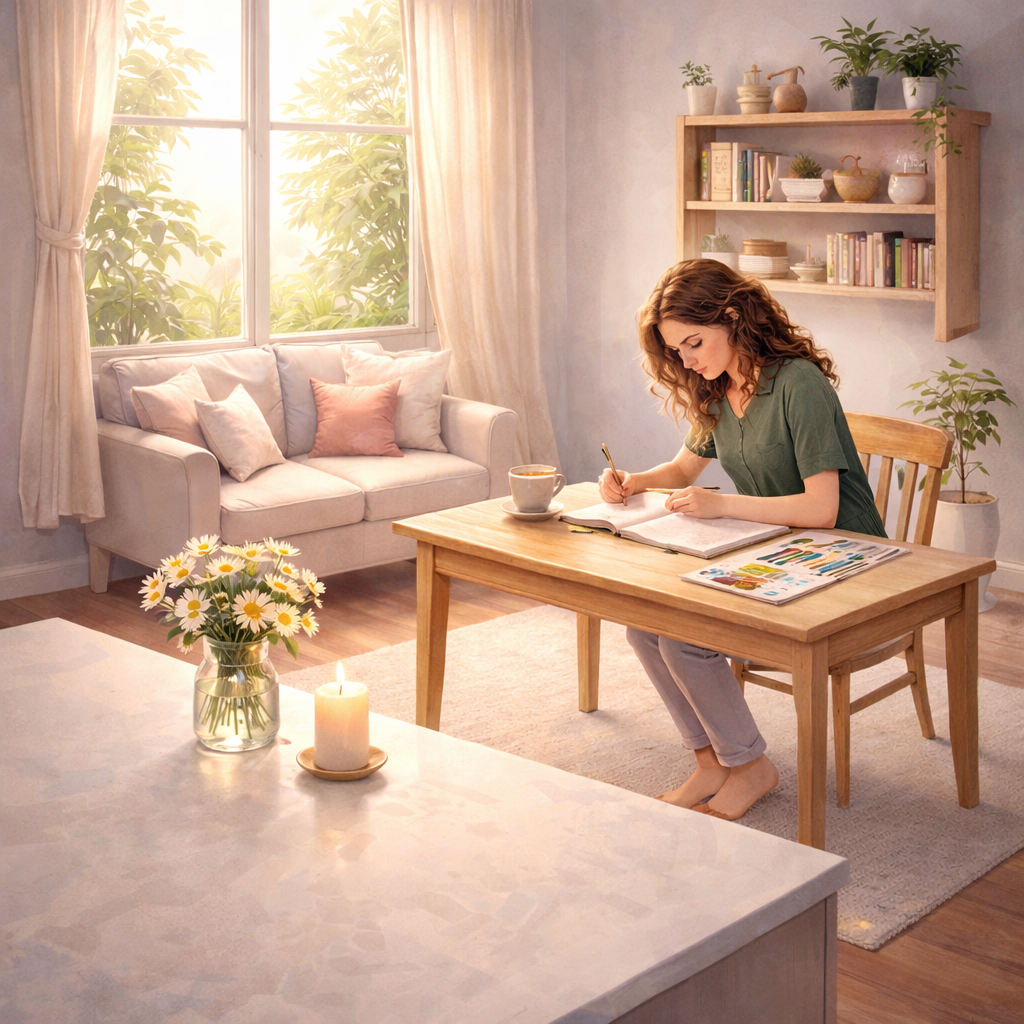
When we think about creativity, we often picture paint-stained hands, half-finished canvasses, or coloured pencils littered across a desk. While these forms of artistic expression are powerful, they can also feel intimidating, even unrealistic, when life is busy, overwhelming, or you’re just burnt out and don’t have the energy. To me, this is especially relevant right now, during finals season as the first semester of the school-year draws to a close before winter festivities can properly begin.
Not everyone has the time, energy, or space to sit down and “create” in the traditional sense. But what if creativity didn’t have to look like that? What if creativity already quietly lived in the things we do every day?
Why are we putting something as abstract and fluid as creativity and art into a box? Lately, I’ve been thinking a lot about everyday rituals and how easily we overlook them as outlets of creativity. For me, this tends to look like cooking meals I find online, rearranging my apartment, and even choosing colour schemes for highlighters when I’m studying. We tend to think of these activities as chores or tasks to get through, rather than moments of expression. That being said, when we purposefully slow down and engage with them intentionally, they can become forms of creative therapy; gentle, grounding, and accessible to even the busiest of people.
Cooking as a Sensory Reset
Cooking, in my opinion, is one of the most underrated creative acts. It’s sensory, embodied, and rooted in the present moment. I’ve always loved turning on some music in my headphones and meandering through the grocery aisles. Getting lost in the possibilities is such a massive part of creating art, and even something as simple as grocery shopping and meal planning involves this if you focus on that.
There’s something grounding about chopping vegetables, mindlessly stirring a pot, and tasting as you go. You’re using your hands, your senses, and your intuition, all at once.
From a mental health perspective, cooking has a myriad of benefits. To name a few:
- It anchors your attention in the present moment, aiding in stress relief.
- It provides a sense of control and accomplishment
- It encourages mindfulness through engaging your senses such as smell, texture, and taste.
Even following a simple recipe can feel soothing when your thoughts are racing. And when you let yourself experiment, mixing spices, plating your food in a beautiful way, and adding ingredients you think might work well, it becomes less about productivity and more about creativity and play.
Cooking provides nourishment for your body, of course, but also for your nervous system.
Creatively Studying: Colour, Structure, and Control
I know what you’re thinking, and I get it! Studying is rarely thought of as a creative act, especially to those of us in school who oftentimes view it as a means to an end, but it can be!
Turning studying into a creative outlet, for me, often looks like choosing highlighter colour schemes, turning notes into mind maps, or organizing information in more visually aesthetic ways. Not only does this make overwhelming information feel manageable, but it’s a way you can fit creativity into your daily routine without feeling like you’re wasting your time you should be using to study.
Creative studying rituals can:
- Restore a sense of agency during periods of academic stress
- Improve focus and memory through visual organization
- Encourage self-compassion through allowing flexibility in what learning looks like
- Make academic work feel less punitive and more humane
- Lower anxiety by making abstract information concrete and visible
I’ve always found something calming about deciding how information will live on a page. Colour-coding, drawing diagrams, making flow charts, and mapping out ideas all visually transform studying from tedious, passive consumption into relaxing, active engagement. It reminds us that learning doesn’t have to be rigid and look the same as everyone else’s to be effective.
To every girl who was made fun of for drawing extravagant note titles, carrying thirteen different Mildliners, and assigning a colour to every type of important information; I’m done pretending that joy, creativity, and intelligence can’t exist together.
Redecorating, Decluttering, and Reclaiming Your Space
Redecorating and decluttering is often framed as a tedious productivity task, but it’s also deeply emotional. Our spaces hold memories, stress, and identity. Changing them, even in miniscule ways, can feel like hitting a reset button.
Rearranging your space or letting go of items can:
- Reduce anxiety and mental overload
- Increase feelings of control and mental clarity
- Support emotional regulation by intentionally creating calmer environments that “spark joy”, as Marie Kondo once said.
Choosing where things go, what stays, and what leaves is an act of self-definition. It’s saying to yourself, this space reflects me, not who I used to be or who I feel pressured to become. That’s a form of creative expression, whether we label it that way or not.
Creativity Doesn’t Have to Be Formal to Be Healing
One of the biggest, most unfortunate barriers to creativity, and even art therapy as a practice, is the belief that it has to look a certain way to count. That creativity requires time, talent, or training. But creativity isn’t about producing something impressive. It never has been. It’s about engaging with the world in a way that feels intentional and alive.
Everyday rituals remind us that creativity can be woven into daily life. They remind us that self-care doesn’t always mean bubble baths, facemasks, and bullet journalling; it can mean choosing music that matches your mood, allowing yourself to rest without guilt, or folding laundry slowly instead of rushing through it.
So if formal creative methods like sketching or sculpting feel out of reach right now, that’s okay. Start where you are. Let yourself slow down and see the creative potential in what you already do on a day-to-day basis. Because creativity doesn’t have to be loud, obvious, or polished to have therapeutic value, it just has to be yours.
Maybe healing doesn’t always come from making something new.
Maybe sometimes, it comes from noticing the art and creativity that’s already there.